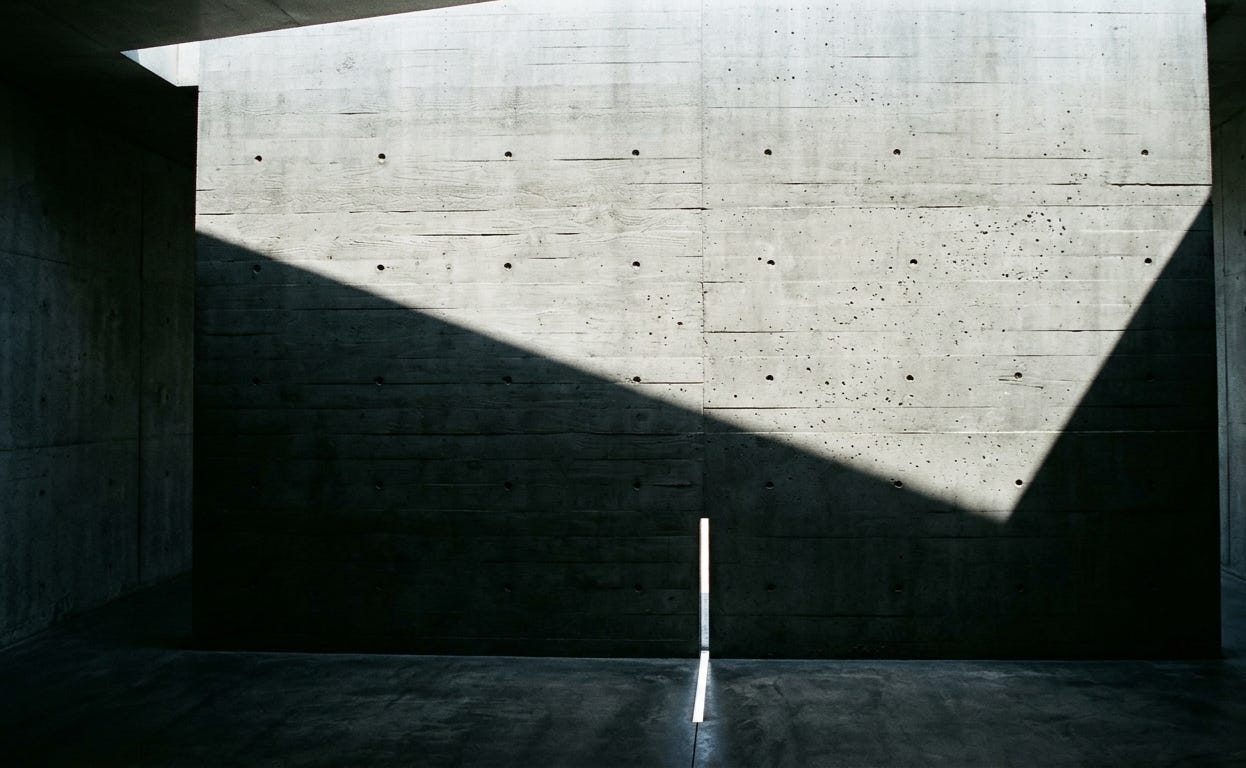
There is an assumption we keep running into: that heavy materials — stone, concrete, raw plaster — are cold by nature, and that warmth has to come from somewhere else. Wood on top. Textiles layered over. Soft lighting apologising for the wall underneath it.
We do not think heaviness and warmth are opposites. We think most heavy materials are simply handled without enough attention to how light moves across them, and that is what reads as cold. The material was never the problem.
A concrete wall, poured and finished with real care about texture and how it catches morning light differently than afternoon light, can feel like a sanctuary rather than a bunker. The mass becomes stillness, not coldness. Stone stacked with variation in it, rather than uniform slabs, holds shadow the way skin holds a tan — unevenly, honestly, in a way that changes throughout the day. These materials were never meant to be smoothed into submission. They were meant to be left alone enough to keep their own rhythm.
This is most of what we are doing with paper, if we are honest about it. Layering something thin and unstable until it becomes structurally serious, then refusing to let it lose its texture in the process. The final piece reads as heavy — stone-like, permanent, architectural — but it still holds the evidence of the hand that built it, layer by layer. Weight and warmth, at the same time, from the same object.
We think a house should hug the ground rather than announce itself above it. We think a solid wall used well can frame a single view the way a sculpture frames negative space — deliberately, with restraint, saying less so the one thing it does say matters more. And we think texture, real texture, hand-worked and slightly uneven, does more to soften a heavy material than any amount of styling around it ever could.
None of this is really about softening brutalism. It is about noticing that brutalism, done with attention, was never actually cold to begin with.
Le poids n'exclut pas la chaleur. El peso no excluye la calidez.